
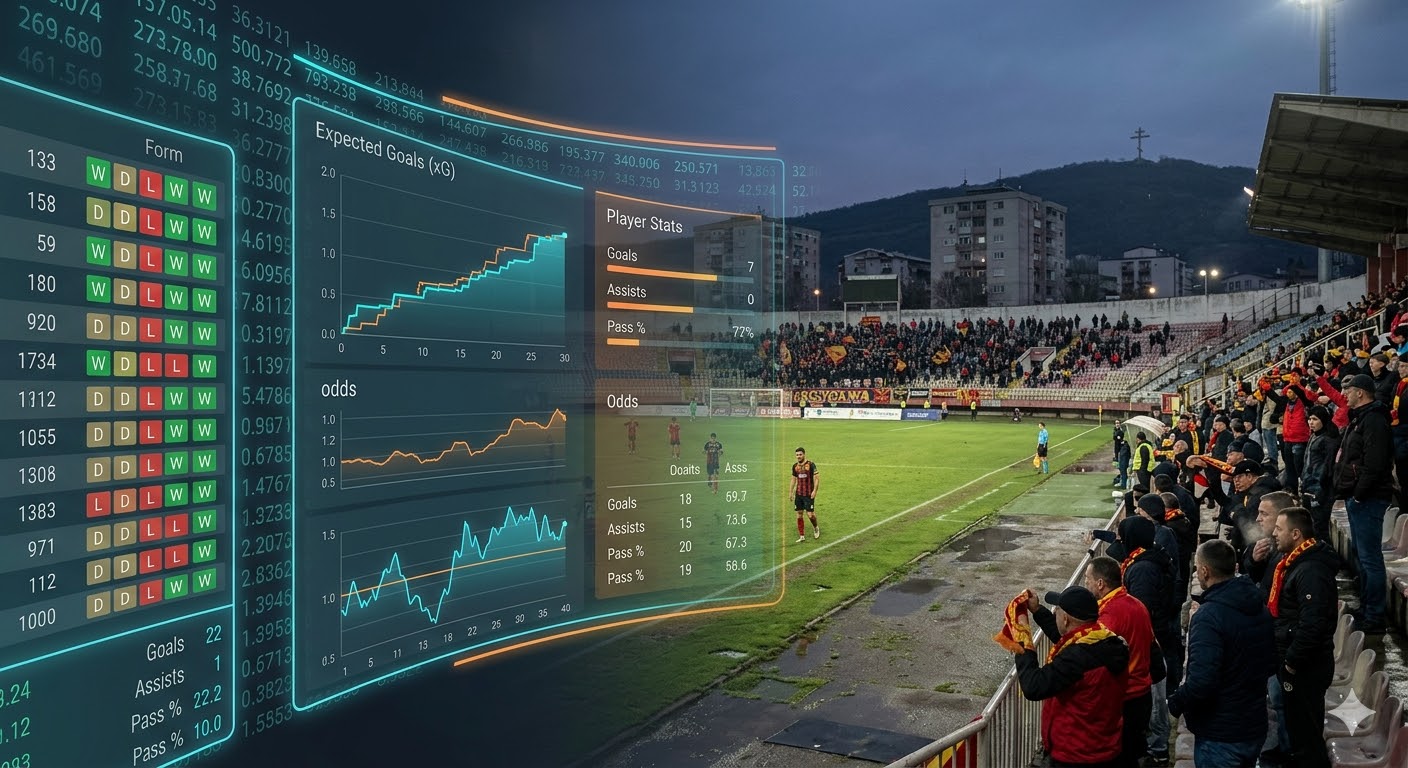
There’s a point where numbers stop telling the full story. If you follow football through stats alone, everything looks clean. Form tables line up. Expected goals suggest patterns. Odds move in ways that feel logical. But once you start paying attention to smaller leagues, especially in places like Macedonia, that neat structure begins to loosen. Not dramatically. Just enough to matter. Because out here, information doesn’t always travel the way it does in bigger competitions. And that gap creates something algorithms still struggle to deal with.
When the Data Is Technically Right… But Not Quite
On paper, a match might look straightforward. One team is in better form, scoring more, conceding less. The odds reflect that, whether you’re looking at local markets or browsing through markets like soccer Betway where everything lines up neatly at first glance. Most models will land in roughly the same place. But then the match starts, and it doesn’t follow the script at all. That usually isn’t random. It’s just that some of the inputs never made it into the system. A midfielder picked up a knock midweek but still starts. A coach is rotating quietly because of something happening behind the scenes. A pitch hasn’t held up well after days of rain, slowing everything down just enough to disrupt a team that relies on quick movement. None of that shows up clearly in the numbers. Locally, though, people know.
The Kind of Details You Only Pick Up by Being Close
Local knowledge isn’t always about inside information. Most of the time, it’s smaller than that. Things you notice if you follow a league week after week, not just through results, but through context. You start to recognize how certain teams behave at home, not just in terms of wins and losses, but in how they approach matches. Some sides play with more edge in front of their own crowd. Others tighten up. You notice which stadiums feel heavier, where matches slow down, where referees tend to let more physical play go. Even travel matters more than it looks. In smaller leagues, trips aren’t always routine. Timing, conditions, even the rhythm of the week can shift how a team shows up. None of these things are big on their own. But they stack.
Why Algorithms Still Miss It
Modern betting models are built to process huge amounts of data quickly. That’s their strength. They can adjust for trends, weigh probabilities, and react faster than any individual ever could. But they rely on what can be measured cleanly. And that’s where the limitation sits.
A model can account for goals, shots, possession. It can even factor in long-term tendencies. But it has a harder time with things that don’t leave a consistent trace. Atmosphere. Subtle tactical shifts. A team that looks fine statistically but has been drifting for weeks if you actually watch them. Those are signals, just not ones that translate neatly into data points.
Where the Gap Still Exists
This doesn’t mean local knowledge overrides everything. Plenty of matches still play out exactly as expected. Favorites win. Patterns hold. But in certain spots, especially in leagues that don’t get constant global attention, there’s still a gap between what the numbers suggest and what actually happens on the pitch. You see it more clearly in live moments too. A match that feels flat despite decent stats. A team pushing without really threatening. Another side waiting for a moment that isn’t obvious unless you’ve seen them play like that before. The odds adjust, but not always immediately, and not always in the right direction.
Watching Still Matters
There’s a tendency now to treat football as something you can follow entirely through numbers. And to an extent, that works. But it strips away the texture of the game. Because football isn’t just patterns. It’s rhythm, hesitation, confidence, tension. Things that don’t sit neatly in a dataset but still shape outcomes. That’s where local knowledge holds its value. Not as a shortcut, and not as something mystical. Just as another layer of understanding, built slowly over time, that fills in the spaces where the data goes quiet. And in those spaces, even now, there are still moments where the algorithm is just a step behind.