
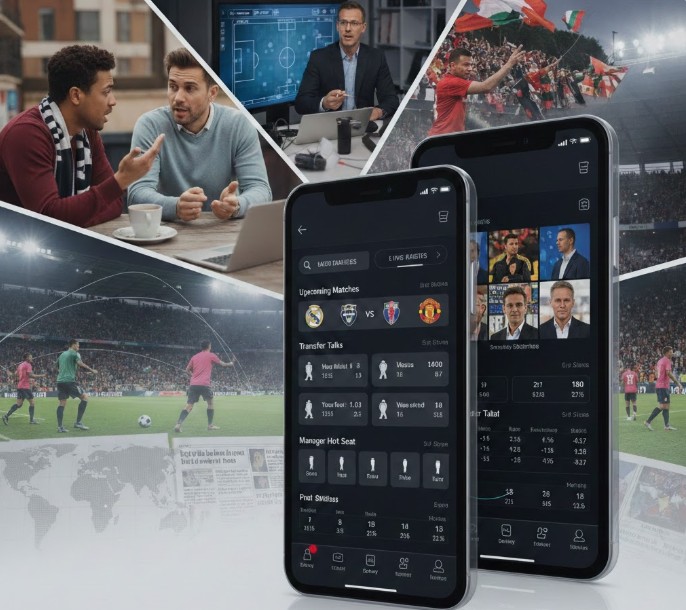
Football doesn’t really stop. Even when there’s no match on the screen, it’s still there in the background. Lineups get debated days before kickoff. Injuries become talking points. Managers are questioned over coffee. In places where domestic matches matter as much as European nights, the sport feels less like a weekly event and more like an ongoing discussion that never quite settles.
That constant conversation has quietly reshaped online betting platforms. They are no longer built just for ninety minutes on a Saturday. They are designed to sit inside that wider flow. When someone opens a platform such as betway, they’re not arriving at a single moment. They’re stepping into something that has already been unfolding all week.
Football doesn’t wait for matchday
There was a time when betting felt straightforward: you checked the fixture list, placed your wager, and returned when the final whistle blew. That made sense when attention spiked only around kickoff. It doesn’t fit the way football works now.
Fans follow press conferences, squad rotations, tactical shifts, and even training ground whispers. Mobile and online sports betting platforms like betway have had to move with that rhythm; markets open earlier, odds respond gradually to news, and context builds over days rather than minutes.
Underneath that sits tech designed to process information continuously. Injuries get reported, lineups get confirmed, a team goes on a good run or falls apart for a few weeks, and all of that quietly shifts the picture. Prices adjust. Options move around. Most people never stop to think about it, because it just happens. But there’s a lot being balanced at once. Hundreds of leagues, big European nights and smaller domestic games alike, all ticking along together. And somehow it stays in step, so when you check in, it feels steady rather than chaotic.
Context is part of the product
Football isn’t a string of disconnected matches. Every game carries weight from what came before. A side coming off three losses feels different from one riding momentum. Travel, fatigue, suspensions, and squad depth all shape the mood before kickoff.
Online betting platforms reflect this by layering statistics, head-to-head history, and performance trends directly into the interface. Behind that clean display is a stack of systems handling historical databases, live data feeds, and performance monitoring tools. The tech has to balance speed with stability, making sure thousands of users can check the same match without lag or confusion.
When the conversation speeds up
Once the match begins, the tone changes. A late goal or a red card doesn’t just alter the scoreline; it shifts the entire mood of the week. Platforms must react in seconds, suspending options, recalculating positions, and reopening markets without creating chaos.
This is where event-driven design becomes crucial. The system moves with the match itself. If something changes on the pitch, the platform adjusts immediately. It cannot wait for users to refresh a page. That responsiveness keeps the digital experience aligned with the emotional swing of the game.
Betway, operating within this football-heavy landscape, relies on that same balance between live data processing and steady interface design. The aim isn’t to flood the screen with movement. It’s to make sure every shift in the match is reflected clearly and without friction.
A sport that rarely goes quiet
Football’s global calendar never really clears. Domestic leagues overlap with continental competitions. International breaks interrupt and restart domestic rhythm. Time zones blur together, and there is almost always a fixture somewhere.
For betting platforms, that means building tech for endurance as much as for peak moments. Systems have to remain stable through midweek qualifiers and high-profile derbies alike. The conversation keeps running, and the infrastructure has to keep up.
Football’s continuous nature has pushed platforms to evolve beyond simple transactions. They now operate inside a sport that lives between matches as much as during them. The tech behind these platforms mirrors that reality, supporting a game that is always being analysed, argued about, and anticipated long before the next whistle blows.